When I was trying to understand Simile for Area, I actually faced a small issue that confused me at first, and I want to share it with you like we are directly talking.
I remember I was struggling to explain area in a simple and creative way, but I kept getting stuck in boring definitions. Then I realized I needed a different approach, so I handled that issue by thinking in comparisons.
I used real life examples like a carpet covering the floor or paint spreading over a wall to understand area better.
This made everything clear for me, and I felt much more confident after that. I learned that when I connect math with everyday life, it becomes easier to remember and explain.
Now, whenever I think about simile for area, I always use simple comparisons because I learned from my experience that this method helps remove confusion and makes learning more effective and interesting.
What Is a Simile? (Simple Explanation)
A simile is a figure of speech that compares two different things using like or as.
👉 Example:
The park was as peaceful as a sleeping baby.
Here, the calm feeling of the park is compared to a sleeping baby.
Why Writers Use Similes
- They make descriptions clearer.
- They help readers visualize scenes.
- They add emotion and creativity.
- They improve storytelling and imagery.
In simple terms, similes help readers feel the space instead of just reading about it.
15 Similes for Area (With Meaning & Examples)
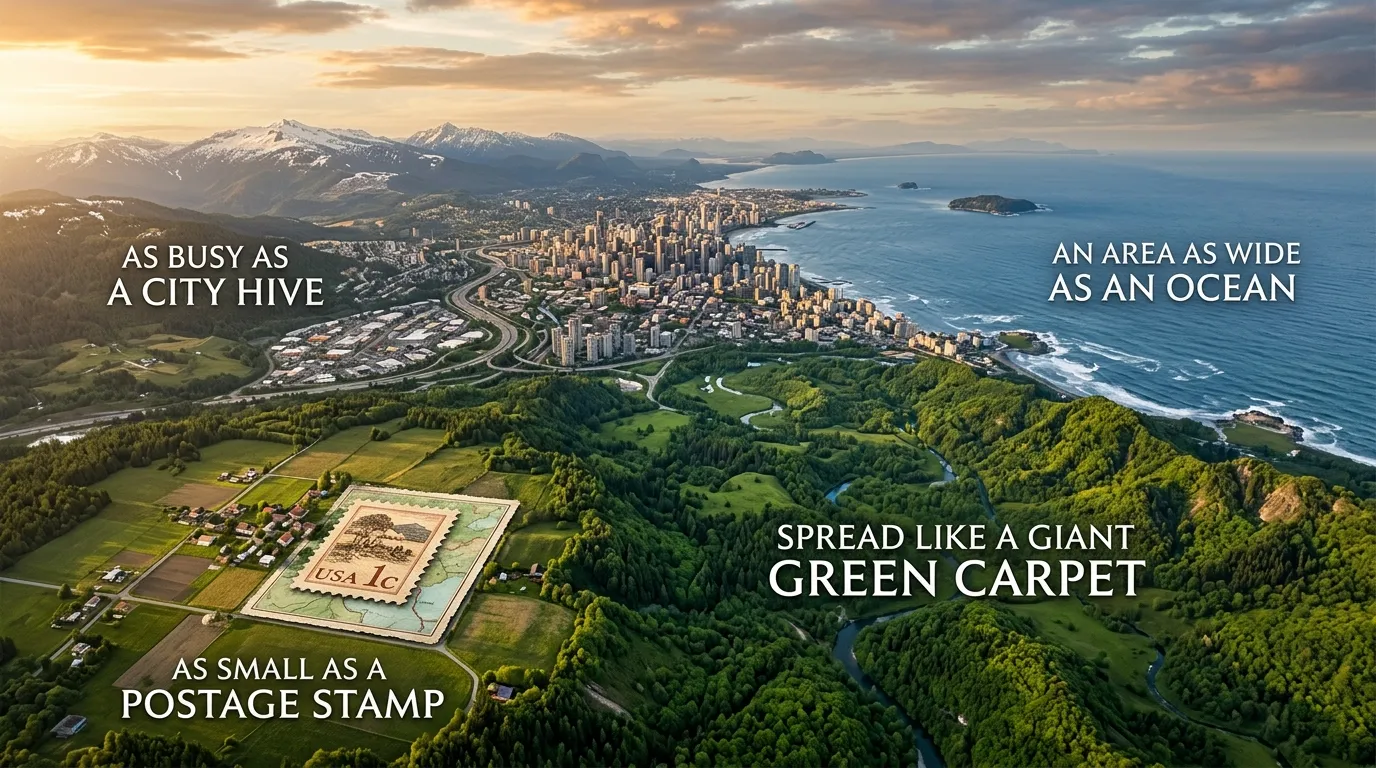
1. The area spread like an endless ocean
Meaning: Very large space.
Explanation: Shows vastness and openness.
Example Sentences:
- The desert spread like an endless ocean before us.
- From the hilltop, the farmland looked like an endless ocean.
2. The area was as busy as a marketplace
Meaning: Full of activity.
Explanation: Suggests noise, movement, and energy.
Examples:
- The city square was as busy as a marketplace at noon.
- The festival area felt as busy as a marketplace.
3. The area lay like a sleeping giant
Meaning: Large but quiet.
Explanation: Describes calmness with hidden power.
Examples:
- The valley lay like a sleeping giant beneath the clouds.
- At dawn, the town rested like a sleeping giant.
4. The area shone like a field of stars
Meaning: Bright and beautiful space.
Explanation: Used for illuminated places.
Examples:
- The city area shone like a field of stars at night.
- The festival lights made the park glow like a field of stars.
5. The area felt as open as the sky
Meaning: Wide and free space.
Explanation: Creates a feeling of freedom.
Examples:
- The plains felt as open as the sky.
- Standing there, the land seemed as open as the sky.
6. The area was packed like a box of sardines
Meaning: Extremely crowded.
Explanation: Highlights lack of space.
Examples:
- The concert area was packed like a box of sardines.
- The market streets were packed like sardines.
7. The area stretched like a green carpet
Meaning: Smooth and continuous land.
Explanation: Often used for fields or grasslands.
Examples:
- The meadow stretched like a green carpet.
- Farms rolled out like a green carpet across the valley.
8. The area buzzed like a beehive
Meaning: Full of activity and sound.
Explanation: Shows constant movement.
Examples:
- The shopping area buzzed like a beehive.
- The office floor buzzed like a beehive during work hours.
9. The area stood silent like a deserted island
Meaning: Empty and quiet.
Explanation: Emphasizes loneliness.
Examples:
- After midnight, the streets felt like a deserted island.
- The abandoned factory area stood silent like a deserted island.
10. The area looked like a maze
Meaning: Complicated layout.
Explanation: Hard to navigate space.
Examples:
- The old city area looked like a maze.
- The market lanes felt like a maze to visitors.
11. The area glowed like molten gold
Meaning: Warm, shining environment.
Explanation: Used during sunset or golden light.
- The fields glowed like molten gold at sunset.
- The evening sun made the area shine like molten gold.
12. The area felt as small as a pocket
Meaning: Very tiny space.
Explanation: Describes limited area.
Examples:
- The room felt as small as a pocket.
- The café seating area was as small as a pocket.
13. The area moved like flowing water
Meaning: Smooth movement of people or energy.
Explanation: Suggests natural motion.
Examples:
- The crowd moved like flowing water through the streets.
- Traffic in the downtown area flowed like water.
14. The area rested like a calm lake
Meaning: Peaceful and still place.
Explanation: Creates tranquility.
Examples:
- The countryside rested like a calm lake.
- Early morning made the park feel like a calm lake.
15. The area rose like a fortress
Meaning: Strong or protected place.
Explanation: Suggests safety or power.
Examples:
- The city area rose like a fortress against the mountains.
- The ancient walls stood like a fortress.
Practical Exercise: Test Your Simile Skills
Questions:
- The playground was as busy as _______.
- The desert stretched like an _______.
- The streets were packed like _______.
- The village rested like a _______.
- The city lights shone like _______.
- The field spread like a _______.
- The empty hall felt like a _______.
- The crowd moved like _______.
- The town looked like a _______.
- The park felt as open as _______.
Answers with Explanations
- a marketplace — shows activity.
- endless ocean — expresses vast area.
- a box of sardines — means crowded space.
- calm lake — peaceful setting.
- a field of stars — bright area imagery.
- green carpet — smooth continuous land.
- deserted island — quiet and empty place.
- flowing water — smooth movement.
- maze — complex layout.
- the sky — wide open feeling.
How to Create Your Own Simile for Area
You can easily build your own simile using this formula:
👉 Area + like/as + familiar image
Examples:
- The park was as lively as a festival.
- The desert looked like golden waves.
Ask yourself:
- Is the area big or small?
- Is it quiet or busy?
- What object gives the same feeling?
That’s how creative writing similes are born!
Conclusion:
To conclude, a simile for area helps us understand measurement by comparing it with familiar objects or situations. Just like a garden’s space or a carpet’s coverage, area shows how much surface something occupies.
Using such comparisons makes learning easier and more relatable for students. Overall, similes simplify mathematical ideas and turn abstract concepts into clear, everyday understanding that anyone can visualize and remember with strong visual clarity in learning.