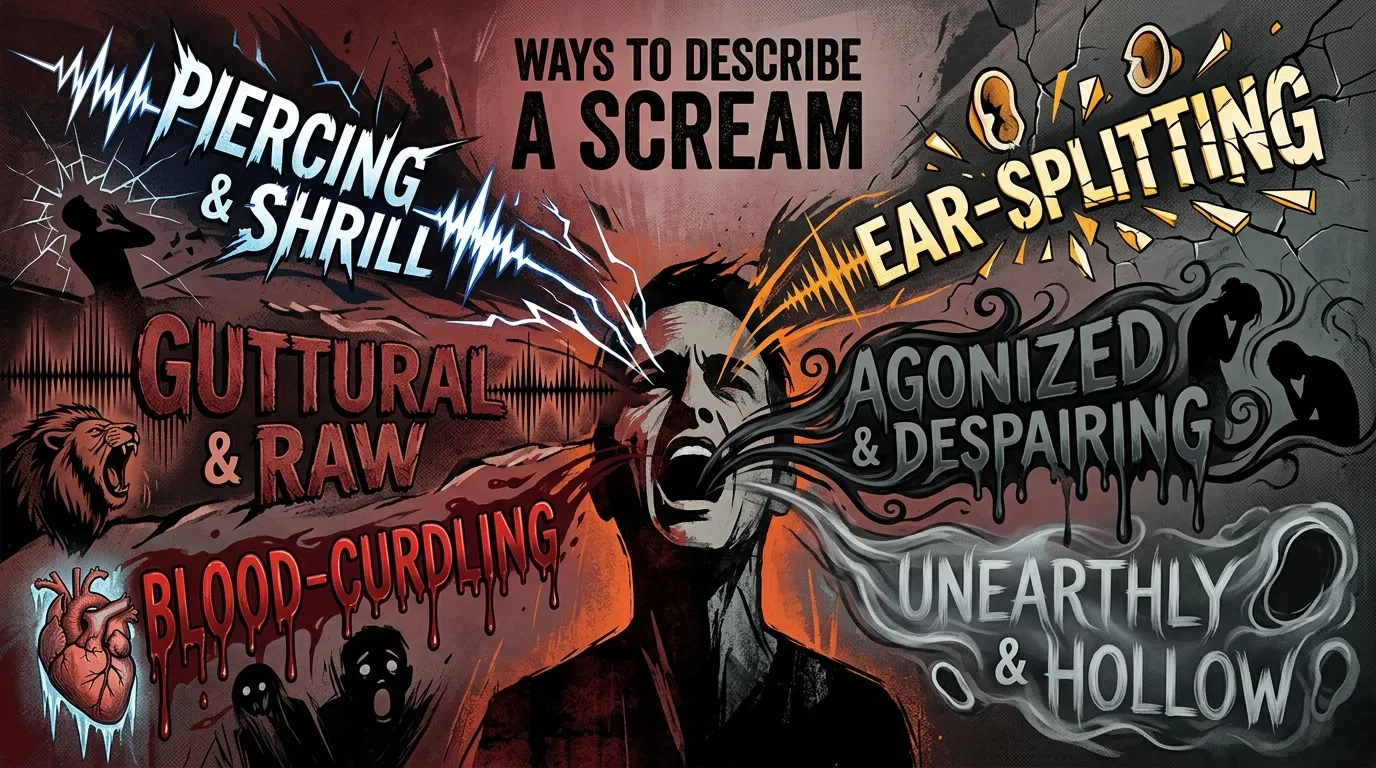
I still remember when I first faced an issue while trying to find better ways to describe a scream in my story writing. I was working on a dramatic scene where a character suddenly experienced fear, and I simply wrote she screamed.
When I read it again, it felt very plain and weak. I knew something was missing, but I didn’t know how to fix it.
So I stopped and handled it step by step. I, as a writer, tried to understand what kind of scream it actually was. Was it full of fear, pain, shock, or panic?
This helped me rethink the scene more deeply. I started exploring different expressions like a sharp cry echoed, a blood-chilling scream, and a broken, breathless shout. Slowly, I learned that describing a scream is not just about sound, but emotion too.
After that experience, I improved my ways to describe a scream and made my storytelling much stronger and more realistic.
Let,s dive in!
Understanding What a Scream Really Means in Writing
In fiction, a scream is not just sound it is an emotional release. It happens when language fails and emotion takes over.
A scream can represent:
- A moment of terror when someone loses control
- A burst of pain that the body cannot hold back
- An explosion of anger or frustration
- A sudden shock or surprise
- Even silent emotional suffering
The key idea is simple: a scream is always tied to context. Without context, it’s just noise. With context, it becomes storytelling.
Types of Screams Based on Emotion
Fearful Screams
Fear screams are sharp, sudden, and uncontrolled. They often happen in moments of danger or shock.
Example idea: a character seeing something terrifying and letting out a broken, breathless cry.
Pain-Induced Screams
These are deep, raw, and often involuntary. They can feel weaker, strained, or trembling depending on intensity.
They often describe:
- injury
- heartbreak
- emotional collapse
Angry Screams
Anger screams are loud, forceful, and aggressive. They come from frustration or rage and often dominate the environment.
They feel:
- explosive
- commanding
- intense
Joyful Screams
Not all screams are negative. Joy screams happen during excitement, celebration, or surprise.
They are:
- High pitched
- energetic
- often followed by laughter
Silent Screams
These are psychological screams no sound, but intense emotion.
They show:
- emotional breakdown
- trauma
- inner suffering
Strong Alternatives to Screamed (Better Vocabulary)
Instead of repeating screamed, use stronger verbs that match emotion and tone:
- Shrieked → sharp fear or shock
- Shrilled → high-pitched, intense sound
- Howled → emotional, animal-like cry
- Wailed → deep sadness or grief
- Bellowed → loud and powerful voice
- Screeched → harsh and painful sound
- Yelled → general loud expression
- Hollered → informal loud shout
- Roared → powerful anger or dominance
- Cried out → sudden emotional reaction
Each word changes the emotional meaning of the scene, so choose carefully based on tone.
Sensory Ways to Describe a Scream
Sound-Based Description
Instead of naming the scream, describe how it sounds:
- piercing through silence
- sharp like broken glass
- echoing down empty halls
- trembling in the air
- cutting through noise like a blade
Physical Reaction
A scream is not just sound it affects the body:
- throat tightening
- lungs burning
- body shaking
- tears forming instantly
- breath breaking apart
Environmental Reaction
A powerful scream changes the surroundings:
- birds flying away suddenly
- conversations stopping mid-sentence
- echoes bouncing off walls
- objects rattling or vibrating
- complete silence after impact
Emotional Impact on Others
A scream also affects witnesses:
- freezing in shock
- sudden panic
- confusion spreading
- instinct to run or help
- emotional discomfort or fear
Writing Techniques to Make Screams Powerful
1. Show, Don’t Tell
Instead of writing:
She screamed loudly.
Write:
Her voice shattered the silence, raw and uncontrolled, as if something inside her had broken free.
2. Use Metaphors and Similes
Comparisons make screams more vivid:
- Her scream tore through the night like shattered glass.
- His voice erupted like thunder in a closed room.
- It echoed like a warning no one could ignore.
3. Use Onomatopoeia Carefully
Sound-based writing can enhance intensity:
- aahhh
- eeeek
- screech
- hhhhhh
Use sparingly to avoid exaggeration.
4. Control Sentence Rhythm
- Short sentences = panic and urgency
- Broken sentences = emotional chaos
- Long flowing sentences = emotional buildup
Example:
She froze.
Then the sound came.
Not a scream something worse.
5. Combine Action with Sound
Instead of isolating the scream, merge it with movement:
She staggered backward, her scream ripping through the air before she even realized she was making it.
Genre-Based Ways to Describe Screams
Horror
Screams in horror are usually:
- sharp
- sudden
- disturbing
- full of fear or helplessness
Romance / Emotional Drama
Here, screams are more emotional than physical:
- heartbreak
- betrayal
- emotional collapse
Action Scenes
Action screams are:
- battle cries
- pain reactions
- urgent warnings
Fantasy
Fantasy screams may include:
- magical creatures
- supernatural fear
- otherworldly intensity
Psychological Fiction
These often focus on:
- internal suffering
- silent screams
- mental breakdowns
Common Mistakes Writers Make
Avoid these errors if you want strong writing:
- Overusing the word screamed
- Using the same intensity for every scream
- Ignoring emotional buildup
- Not showing physical reactions
- Making screams feel unrealistic or repetitive
Before vs After Example
Weak Version:
She screamed when she saw him.
Strong Version:
Her voice broke apart before she could even think, tearing through the air as her body froze in disbelief.
Small changes in detail completely transform impact.
Vocabulary Cheat Sheet for Writers
Fear Words: shrieked, gasped, trembled
Pain Words: wailed, cried out, groaned
Anger Words: roared, bellowed, yelled
Joy Words: squealed, cheered, laughed-shouted
Conclusion:
In conclusion, there are many creative ways to describe a scream, depending on emotion, intensity, and situation. It can be sharp and piercing, soft and fearful, or loud and desperate, each adding depth to a scene.
By choosing the right descriptive words, writers can make a scream feel more realistic and impactful, helping readers connect with the character’s fear, pain, excitement, or surprise in a more vivid and emotional way.