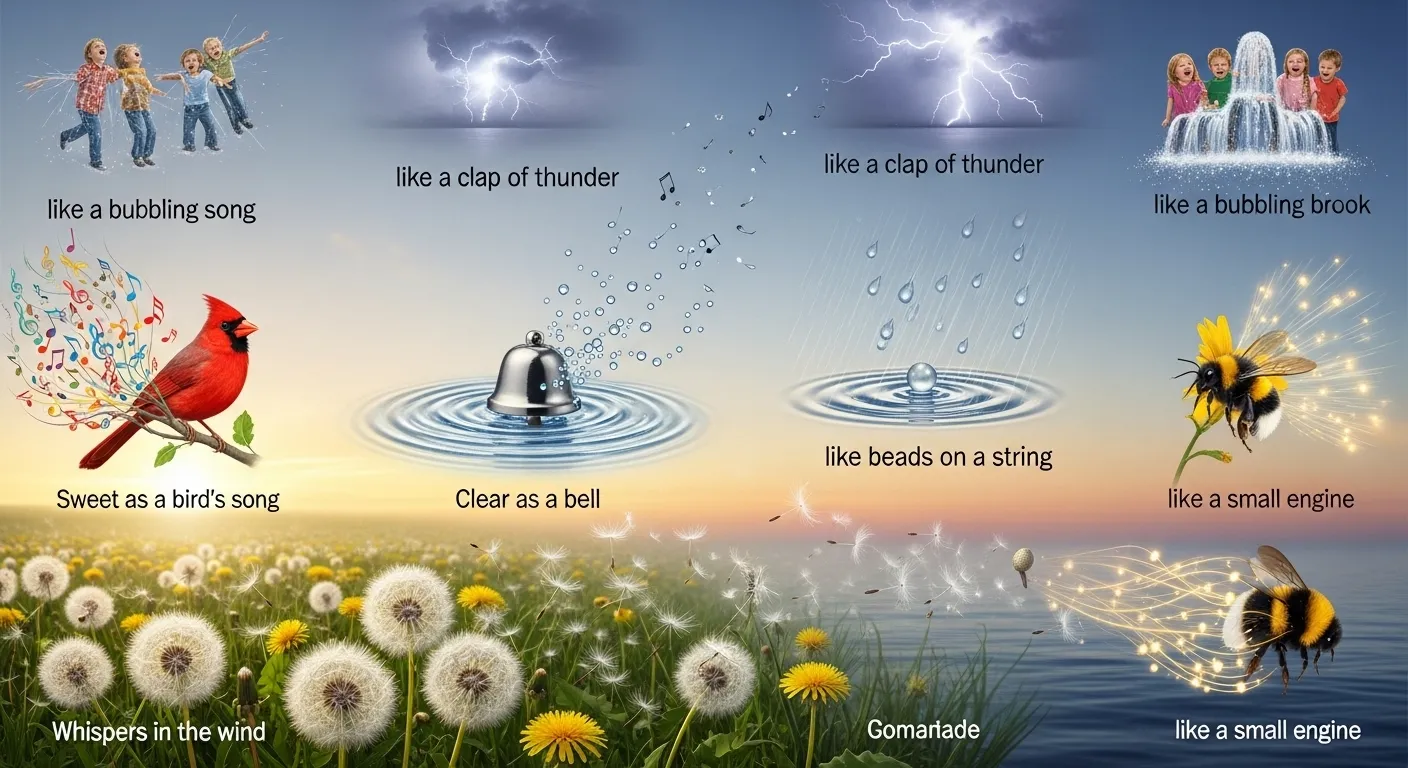
Have you ever tried to describe a sound but felt ordinary words were not enough? Maybe the thunder felt louder than loud, or laughter sounded brighter than happy. This is where a simile for sound becomes powerful.
In simple terms, similes help us compare one thing to another using words like as or like. Instead of saying a sound was loud, you might say the thunder roared like a wild lion. Suddenly, readers can hear the moment in their minds.
Writers use similes because they make language alive. They add emotion, movement, and imagination. Whether you are writing stories, poems, essays, or social media captions, similes make your words more creative and memorable.
Think of similes as a bridge between sound and feeling. They help readers experience noise, music, silence, or chaos as if they were there with you.
So let’s explore some clear and beginner-friendly examples of similes, learn their meanings, and see how you can start creating your own creative writing similes today.
15 Similes for Sound (With Meaning and Examples)
1. The thunder roared like a lion
Meaning: Extremely loud and powerful sound.
Explanation: Suggests strength, danger, and intensity.
Examples:
- The thunder roared like a lion during the storm.
- His angry voice roared like a lion across the room.
2. Her laughter rang like bells
Meaning: Bright, cheerful sound.
Explanation: Creates an image of joy and happiness.
Examples:
- Her laughter rang like bells in the quiet park.
- The children’s giggles rang like bells at recess.
3. The wind howled like a wolf
Meaning: Long, eerie sound.
Explanation: Often used for scary or lonely settings.
Examples:
- The wind howled like a wolf outside the cabin.
- At night, the storm howled like a wolf in the dark.
4. The crowd buzzed like bees
Meaning: Many people talking at once.
Explanation: Suggests energy and excitement.
Examples:
- The stadium buzzed like bees before the match.
- The classroom buzzed like bees after the announcement.
5. His whisper was soft like falling snow
Meaning: Very quiet and gentle sound.
Explanation: Shows calmness and tenderness.
Examples:
- His whisper was soft like falling snow beside her ear.
- The nurse spoke like falling snow to comfort the child.
6. The alarm screamed like a siren
Meaning: Sharp, urgent sound.
Explanation: Creates tension and urgency.
Examples:
- The alarm screamed like a siren at midnight.
- The phone rang like a siren in the silent office.
7. The rain tapped like tiny fingers
Meaning: Light, repeated sound.
Explanation: Makes rain feel delicate and rhythmic.
Examples:
- Rain tapped like tiny fingers on the window.
- Drops tapped like tiny fingers on the roof.
8. The engine growled like a beast
Meaning: Deep, rough sound.
Explanation: Often used for vehicles or machines.
Examples:
- The motorcycle growled like a beast on the highway.
- The old generator growled like a beast starting up.
9. Leaves rustled like whispered secrets
Meaning: Soft moving sound.
Explanation: Adds mystery or calm atmosphere.
Examples:
- Leaves rustled like whispered secrets in the wind.
- The trees spoke like whispered secrets at dusk.
10. The bell chimed like music
Meaning: Pleasant and clear sound.
Explanation: Creates peaceful imagery.
Examples:
- The school bell chimed like music in the morning.
- Wind chimes sounded like music in the garden.
11. The door slammed like thunder
Meaning: Sudden loud noise.
Explanation: Shows anger or shock.
Examples:
- The door slammed like thunder behind him.
- The locker shut like thunder in the hallway.
12. The river murmured like a sleepy voice
Meaning: Gentle flowing sound.
Explanation: Suggests relaxation and calm.
Examples:
- The river murmured like a sleepy voice at night.
- Water flowed like a sleepy voice through the valley.
13. The crowd cheered like crashing waves
Meaning: Strong, rising sound.
Explanation: Shows excitement and movement.
Examples:
- Fans cheered like crashing waves after the goal.
- Applause rolled like crashing waves through the theater.
14. The clock ticked like a heartbeat
Meaning: Steady repeating sound.
Explanation: Often used to show tension or waiting.
Examples:
- The clock ticked like a heartbeat in the silent room.
- Time passed like a heartbeat before the exam began.
15. The flute sang like a bird
Meaning: Sweet musical sound.
Explanation: Suggests beauty and freedom.
Examples:
- The flute sang like a bird in the evening air.
- Her voice rose like a bird during the performance.
Practical Exercise: Identify and Create Similes
Questions
- The thunder sounded ______ like a lion.
- Which sentence contains a simile?
a) The rain fell heavily.
b) The rain fell like silver strings. - Complete the simile: The crowd buzzed like ______.
- Identify the comparison in: Her voice was soft like silk.
- Create a simile for a loud sound.
- Which word signals a simile: fast or like?
- Complete: The wind howled like a ______.
- Is this a simile? The bell rang loudly.
- Write a simile describing music.
- Complete: The clock ticked like a ______.
Answers With Explanations
- roared — compares thunder to a lion’s roar.
- b) because it uses like to compare.
- bees — shows many voices together.
- Comparison between voice and silk using like.
- Example: The explosion sounded like thunder.
- like — similes use like or as.
- wolf — creates an eerie sound image.
- No. It lacks comparison words.
- Example: The guitar sang like a gentle breeze.
- heartbeat — shows steady rhythm.
Conclusion
Similes are small tools with big power. They help readers hear sounds, feel emotions, and imagine scenes clearly. Instead of plain descriptions, simile sentences turn ordinary writing into creative storytelling.
When you understand the meaning of similes and practice using them, your writing becomes more vivid and expressive. The best part is that anyone can create them. Just compare a sound to something familiar using like or as.
So next time you write, listen carefully to the world around you. Ask yourself: What does this sound remind me of? That simple question can lead to beautiful creative writing similes.
Start experimenting today your own unique similes are waiting to be heard.