Have you ever tried to describe a disaster but felt ordinary words just were not enough? Maybe you wanted readers to feel the chaos, fear, or sudden shock instead of simply reading about it. That is where a simile for disaster becomes powerful.
In simple terms, similes help us compare one thing with another using words like as or like. They make writing vivid, emotional, and easy to imagine. Instead of saying something was bad, you might say it hit like a storm tearing through a quiet town. Suddenly, the reader sees the scene clearly.
Writers use similes to turn plain sentences into memorable ones. Whether you are writing stories, essays, captions, or creative pieces, similes add color and life to your words. They help readers connect with your message faster.
In this guide, we will explore the meaning of similes, look at powerful examples of similes related to disaster, and learn how to use similes in writing with confidence. By the end, you will be able to create your own creative writing similes naturally and easily.
Let’s explore together.
What Is a Simile? (Simple Explanation)
A simile is a comparison between two different things using like or as.
👉 Example:
The news spread like wildfire.
Here, news is compared to wildfire to show speed and destruction.
Why Writers Use Similes
- They create strong images.
- They make emotions clearer.
- They improve storytelling.
- They make writing memorable.
In simple terms, similes help readers see and feel what you describe.
15 Powerful Similes for Disaster (With Meaning & Examples)
1. The disaster struck like a lightning bolt
Meaning: Something sudden and shocking.
Explanation: Shows unexpected destruction.
Example sentences
- The accident hit the town like a lightning bolt.
- The bad news arrived like a lightning bolt from nowhere.
2. Chaos spread like wildfire
Meaning: Trouble grows very quickly.
Explanation: Fire represents uncontrollable damage.
Example sentences
- Panic moved through the crowd like wildfire.
- Rumors spread like wildfire after the collapse.
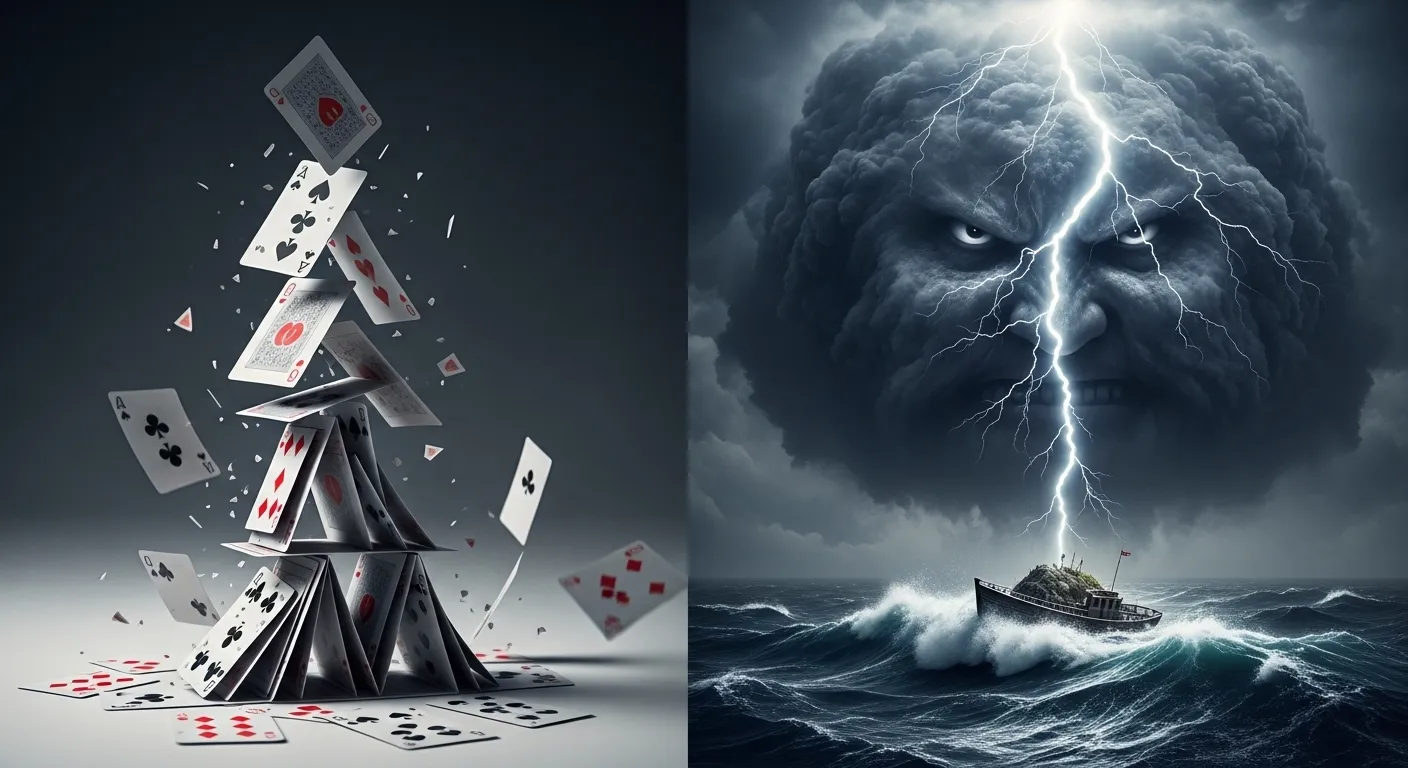
3. The situation fell apart like a house of cards
Meaning: Something weak collapsing instantly.
Explanation: One small problem destroys everything.
Example sentences
- Their plan collapsed like a house of cards.
- The company failed like a house of cards in a storm.
4. Destruction rolled in like a tidal wave
Meaning: Overwhelming force.
Explanation: Nothing can stop it.
Example sentences
- Debt hit him like a tidal wave.
- Fear rushed over her like a tidal wave.
5. The crisis burned like an uncontrolled fire
Meaning: Problems growing beyond control.
Explanation: Fire symbolizes danger spreading fast.
Example sentences
- Anger burned like an uncontrolled fire.
- The conflict grew like an uncontrolled fire.
6. It exploded like a volcano
Meaning: Sudden emotional or physical disaster.
Explanation: Shows powerful release.
Example sentences
- The argument exploded like a volcano.
- Public outrage erupted like a volcano.
7. The failure landed like a crashing airplane
Meaning: Complete and dramatic collapse.
Explanation: Suggests heavy impact.
Example sentences
- The project ended like a crashing airplane.
- His dreams fell like a crashing airplane.
8. Trouble arrived like a dark storm cloud
Meaning: Warning of coming disaster.
Explanation: Builds tension and fear.
Example sentences
- Doubt hung over them like a dark storm cloud.
- Financial problems gathered like storm clouds.
9. The mistake spread like a virus
Meaning: Rapid and harmful expansion.
Explanation: Shows uncontrollable damage.
Example sentences
- Fear spread like a virus.
- The error moved through the system like a virus.
10. The city looked like a battlefield
Meaning: Severe destruction.
Explanation: Compares damage to war.
Example sentences
- After the flood, streets looked like a battlefield.
- The office felt like a battlefield after layoffs.
11. Panic rose like floodwater
Meaning: Fear increasing quickly.
Explanation: Floodwater symbolizes rising danger.
Example sentences
- Panic rose like floodwater in the crowd.
- Anxiety climbed like floodwater during the crisis.
12. Hope vanished like smoke in the wind
Meaning: Hope disappearing instantly.
Explanation: Smoke shows fragility.
Example sentences
- Their chances faded like smoke in the wind.
- Confidence disappeared like smoke.
13. The economy shook like an earthquake
Meaning: Massive instability.
Explanation: Earthquakes represent sudden disruption.
Example sentences
- Markets shook like an earthquake.
- The scandal rocked the company like an earthquake.
14. Disaster unfolded like a nightmare
Meaning: Terrifying and unreal experience.
Explanation: Shows emotional impact.
Example sentences
- The event played out like a nightmare.
- The journey turned into a nightmare.
15. The plan sank like a ship in a storm
Meaning: Total failure under pressure.
Explanation: Storm symbolizes uncontrollable forces.
Example sentences
- Their business sank like a ship in a storm.
- Confidence sank like a ship in rough seas.
Practical Exercise: Practice Using Similes
Try these fun exercises to test your understanding of simile sentences.
Questions
- Complete the simile: The panic spread like ______.
- Identify the simile: The city looked like a battlefield.
- Which word signals a simile: fast, like, quickly?
- Complete: His hopes vanished like ______.
- Is this a simile? The disaster was terrible.
- Create a simile comparing disaster to weather.
- Choose the simile:
a) The storm destroyed homes
b) The storm hit like a hammer - Complete: Trouble arrived like ______.
- Identify the comparison in: Fear rose like floodwater.
- Write your own disaster simile.
Answers With Explanation
- Wildfire — shows rapid spreading.
- Looked like a battlefield — comparison using like.
- Like — similes use like or as.
- Smoke in the wind — shows quick disappearance.
- No — no comparison word is used.
- Example: Disaster came like a raging storm.
- b — includes comparison.
- A dark storm cloud — signals warning.
- Fear compared to floodwater rising.
- Example: The crisis hit like thunder.
Conclusion
Similes are small tools with huge power. They turn simple writing into vivid storytelling. When you use a simile for disaster, you help readers imagine the intensity, emotion, and impact of an event instead of just reading plain facts.
In creative writing, similes make scenes memorable and relatable. They allow readers to connect with your ideas instantly. The more you practice, the easier it becomes to spot and create strong comparisons.
Start noticing similes around you. Try describing everyday situations using comparisons. Soon, you will naturally use creative writing similes that bring your words to life.
Your next great sentence might begin with just two simple words: like or as.