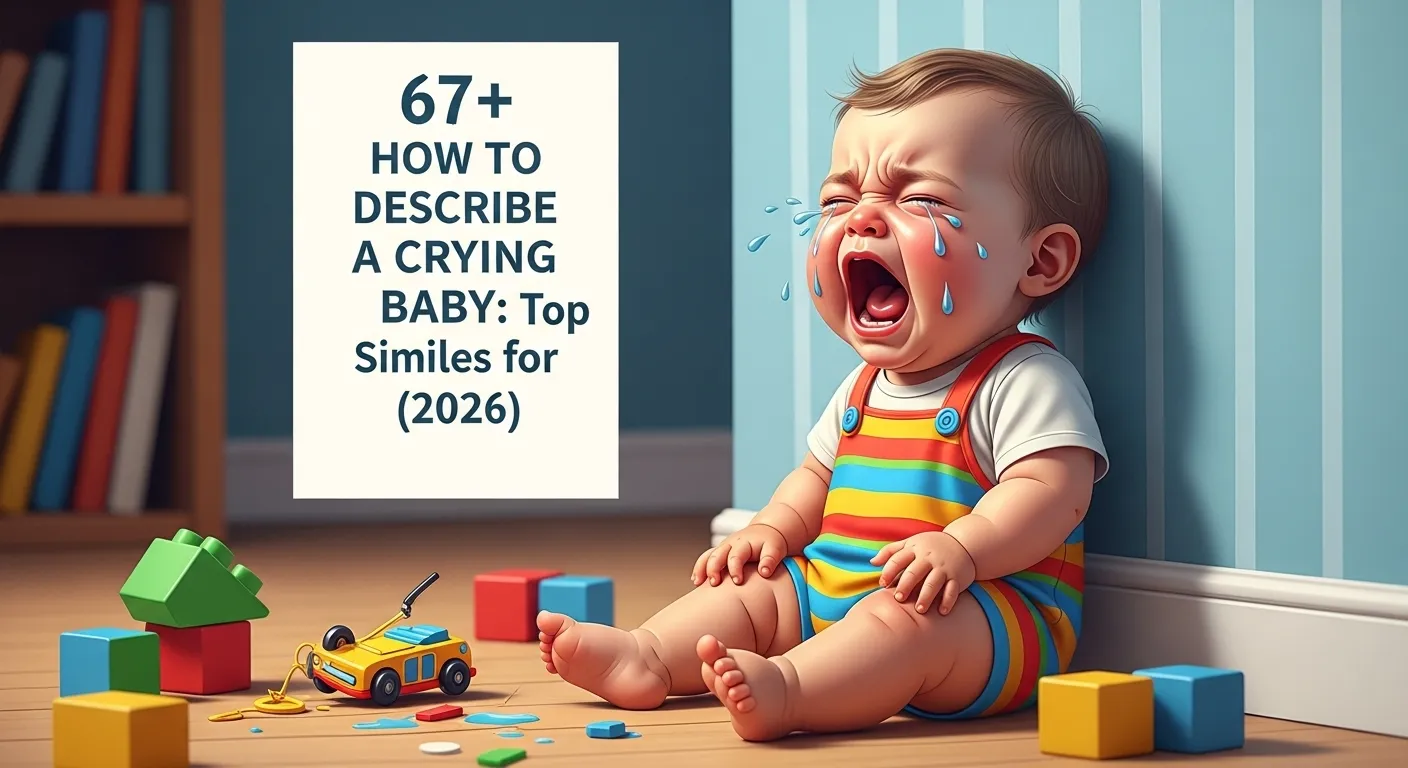
Have you ever tried to describe the sound of a crying baby but felt that simple words were not enough? Saying a baby is crying loudly works, but it does not paint a picture in the reader’s mind. This is where similes come in.
In simple terms, a simile compares one thing to another using words like as or like. Writers use similes to make descriptions more vivid, emotional, and easy to imagine. Instead of plain writing, similes help readers hear, see, and feel what is happening.
When learning creative writing, understanding similes is one of the easiest ways to improve your storytelling. A well-chosen simile can turn an ordinary sentence into something memorable.
For example, describing a crying baby as crying like a siren in the night instantly creates sound, urgency, and emotion.
In this guide, we will explore simile for crying baby examples, understand their meanings, see simile sentences in action, and practice creating your own. By the end, you will know exactly how to use similes in writing with confidence.
What Is a Simile? (Simple Explanation)
A simile is a comparison between two different things using like or as.
👉 Example:
The baby cried like thunder during a storm.
Here, the baby’s crying is compared to thunder to show loudness and intensity.
Why writers use similes
- They make writing more creative
- They help readers imagine scenes clearly
- They add emotion and personality
- They improve storytelling flow
In creative writing similes, the goal is not just comparison. The goal is to make readers feel something.
15 Similes for Crying Baby (With Meaning and Examples)
1. Crying like a wailing siren
Meaning: Very loud and impossible to ignore.
Explanation: Shows urgency and sharp sound.
Examples:
- The baby cried like a wailing siren in the quiet house.
- She rushed upstairs when the baby began crying like a siren.
2. Crying like rain pouring from dark clouds
Meaning: Continuous crying.
Explanation: Suggests nonstop tears.
Examples:
- The baby cried like rain pouring from dark clouds.
- His cries fell like endless rain during the night.
3. Crying like a hungry kitten
Meaning: Soft but needy crying.
Explanation: Expresses helplessness.
Examples:
- The newborn cried like a hungry kitten.
- I heard the baby crying like a tiny kitten in the crib.
4. Crying like thunder shaking the sky
Meaning: Extremely loud crying.
Explanation: Emphasizes power and volume.
Examples:
- The baby cried like thunder shaking the sky.
- Everyone woke when he cried like thunder.
5. Crying like a broken alarm clock
Meaning: Annoying and repetitive crying.
Explanation: Suggests nonstop noise.
Examples:
- The baby cried like a broken alarm clock at midnight.
- Her cries rang like an alarm that would not stop.
6. Crying like wind howling through trees
Meaning: Emotional and haunting sound.
Explanation: Creates a dramatic feeling.
Examples:
- The baby cried like wind howling through trees.
- His cries echoed like lonely wind at night.
7. Crying like a tiny storm
Meaning: Sudden emotional outburst.
Explanation: Shows strong feelings from a small person.
Examples:
- The baby cried like a tiny storm after waking up.
- She turned into a little storm when hungry.
8. Crying like a whistle screaming in the air
Meaning: Sharp, piercing cry.
Explanation: Focuses on high-pitched sound.
Examples:
- The baby cried like a whistle screaming in the air.
- His sharp cry cut through the silence like a whistle.
9. Crying like waves crashing on rocks
Meaning: Repeated crying in bursts.
Explanation: Shows rhythm and repetition.
Examples:
- The baby cried like waves crashing again and again.
- Her cries came in waves like the sea hitting rocks.
10. Crying like a lost lamb
Meaning: Sad and helpless crying.
Explanation: Highlights innocence.
Examples:
- The baby cried like a lost lamb searching for comfort.
- He sounded like a lost lamb calling for his mother.
11. Crying like a squeaky toy
Meaning: High-pitched crying.
Explanation: Adds a playful comparison.
Examples:
- The baby cried like a squeaky toy.
- Every squeeze of discomfort made him cry like a toy.
12. Crying like fire alarms ringing
Meaning: Extremely urgent crying.
Explanation: Signals immediate attention needed.
Examples:
- The baby cried like fire alarms ringing loudly.
- Her cries demanded attention like an alarm.
13. Crying like a violin playing a sad song
Meaning: Emotional and sorrowful crying.
Explanation: Focuses on sadness.
Examples:
- The baby cried like a violin playing a sad tune.
- His soft cries sounded like sad music.
14. Crying like a buzzing mosquito near your ear
Meaning: Irritating repeated sound.
Explanation: Shows persistence.
Examples:
- The baby cried like a mosquito buzzing endlessly.
- His cries stayed close like a buzzing sound.
15. Crying like a melting candle dripping wax
Meaning: Gentle emotional crying.
Explanation: Suggests slow tears.
Examples:
- The baby cried like a candle slowly melting.
- Her quiet sobs fell like melting wax.
Practical Exercise: Identify and Create Similes
Let’s practice using examples of similes. Try answering these questions before checking the answers.
Questions
- Complete the simile: The baby cried like ______ during a storm.
- Which word makes a sentence a simile: like or because?
- Is this a simile? The baby cried loudly all night.
- Complete: The crying sounded as sharp as ______.
- Create a simile showing soft crying.
- Identify the comparison: crying like falling rain.
- Complete: The baby cried like a ______ alarm.
- Which sentence uses a simile?
- The baby cried nonstop.
- The baby cried like thunder.
- Write a simile showing sad emotion.
- Why do writers use similes?
Answers with Explanation
- Thunder or rain — compares sound intensity.
- Like — similes use like or as.
- No — there is no comparison.
- A whistle — shows sharp sound comparison.
- Example: crying like a sleepy kitten — shows gentleness.
- Rain is compared with crying.
- Broken alarm — shows repetition.
- The baby cried like thunder — includes comparison.
- Example: cried like a violin playing softly — shows sadness.
- Writers use similes to make writing vivid and easier to imagine.
Conclusion
Similes may look small, but they have powerful effects in writing. They help readers visualize sounds, emotions, and scenes clearly. When you describe a crying baby using creative writing similes, your words become alive instead of plain descriptions.
The best way to learn how to use similes in writing is simple: observe everyday life and compare it with something familiar. Listen to sounds, notice feelings, and turn them into comparisons.
You might say writing similes is like learning a new language of imagination. The more you practice, the more natural it becomes. So try creating your own simile sentences today and let your creativity grow one comparison at a time.