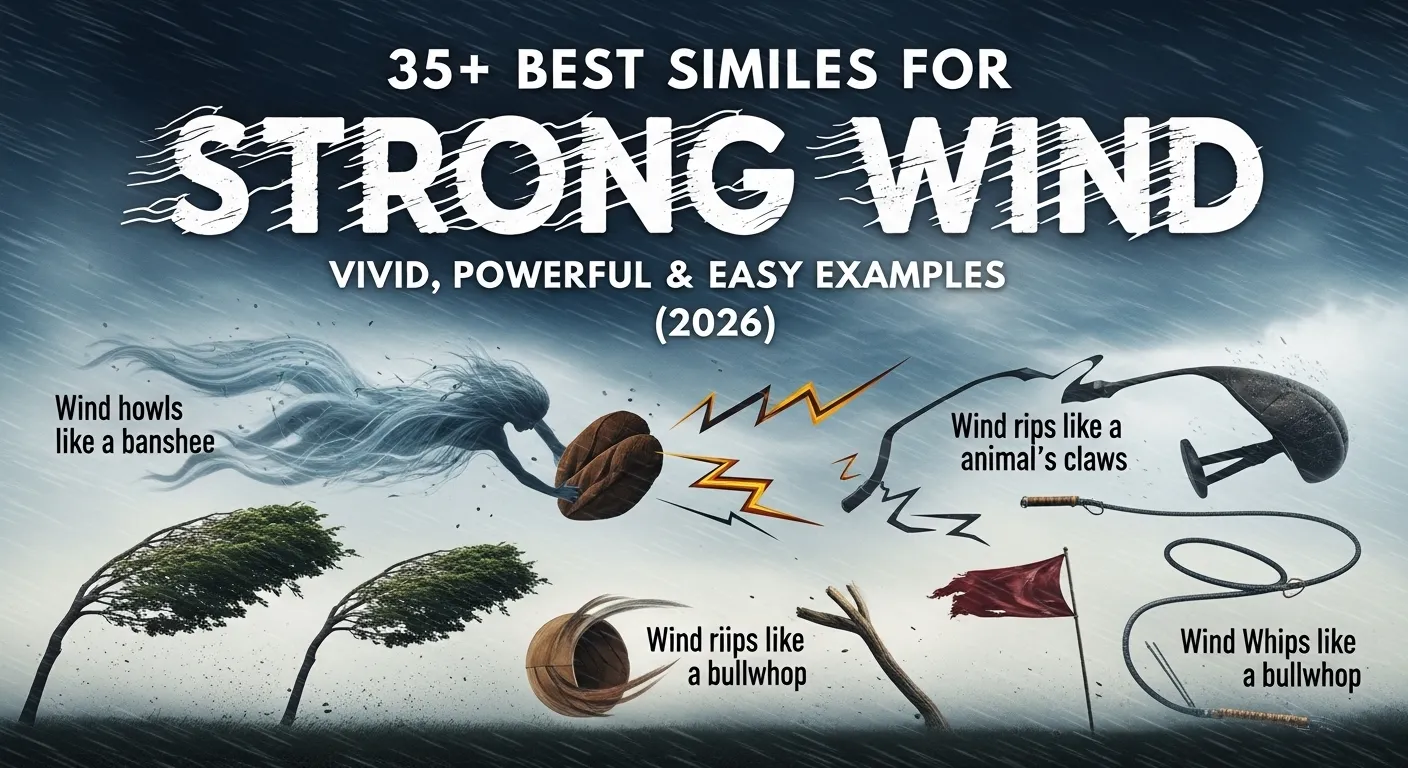
I still remember the day the wind hit so hard, it felt like the sky had lost control. I was walking home, and suddenly the air turned wild like a beast unleashed, pushing against me with full force.
That moment made me realize how powerful nature can be. I tried to stay steady, but the wind wrapped around me like a giant invisible wave, making every step a challenge.
That experience inspired me to explore similes for strong wind because sometimes, simple words like strong just aren’t enough.
I needed expressions that truly capture that feeling, the kind that makes you stop, hold your breath, and respect the moment.
So here, I’m sharing those vivid comparisons with you phrases that describe wind like a roaring lion, like a rushing train, or like a storm breaking free.
If you’ve ever faced wind that shook your confidence even for a second, you’ll connect with these. Let’s turn that powerful experience into words that actually feel alive.
1. The Wind Howled Like a Wolf
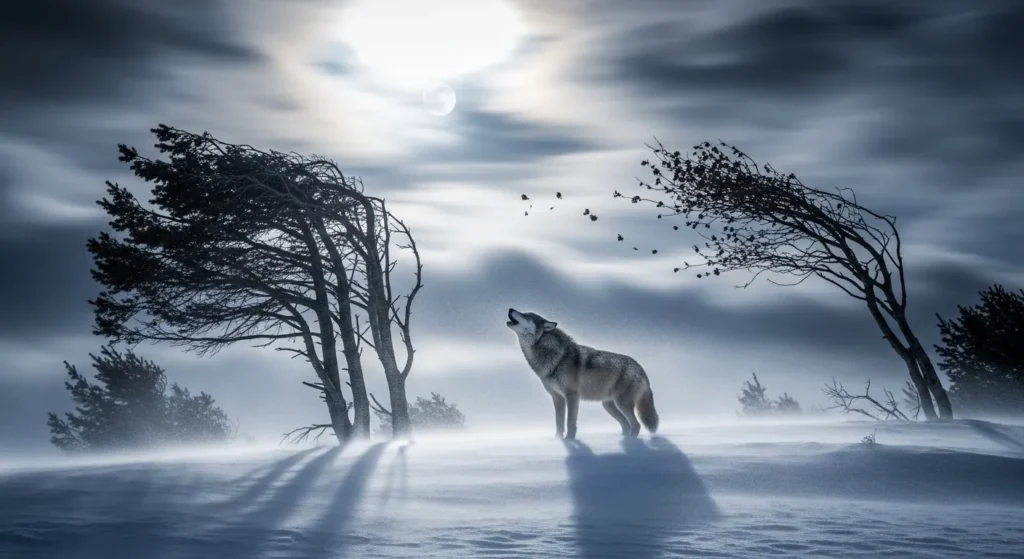
Meaning: Wild, loud, and eerie.
Explanation: This simile gives the wind human-like power and personality, emphasizing its intensity.
Examples:
- The storm approached, and the wind howled like a wolf through the night.
- Trees bent as the wind howled like a wolf across the valley.
2. The Wind Roared Like a Lion
Meaning: Commanding and fierce.
Explanation: Emphasizes the loud, dominant energy of strong wind.
Examples:
- Hurricane winds roared like a lion, shaking the rooftops.
- The wind roared like a lion, warning everyone of the approaching storm.
3. The Wind Whispered Like a Secret
Meaning: Soft, gentle, and mysterious.
Explanation: Highlights subtle movement and the musical quality of gentle wind.
Examples:
- In the morning, the breeze whispered like a secret through the leaves.
- The wind whispered like a secret, carrying the scent of fresh flowers.
4. The Wind Danced Like a Ballerina
Meaning: Graceful and playful motion.
Explanation: Shows elegant, light, and flowing movement of wind.
Examples:
- Leaves danced as the wind twirled like a ballerina.
- The soft breeze danced like a ballerina over the pond.
5. The Wind Raced Like a Cheetah
Meaning: Fast and unstoppable.
Explanation: Highlights quick, forceful movement.
Examples:
- Gusts raced like a cheetah across the plains.
- The storm wind raced like a cheetah, scattering debris in seconds.
6. The Wind Floated Like a Cloud
Meaning: Calm, peaceful, and light.
Explanation: Suggests smooth, gentle motion.
Examples:
- Early morning wind floated like a cloud across the hills.
- The breeze floated like a cloud, barely touching the grass.
7. The Wind Cut Like a Knife
Meaning: Sharp and cold.
Explanation: Shows a piercing, sudden sensation.
Examples:
- The winter wind cut like a knife through her coat.
- On the mountaintop, the wind cut like a knife across exposed skin.
8. The Wind Crashed Like Ocean Waves
Meaning: Destructive and relentless.
Explanation: Emphasizes continuous, forceful impact.
Examples:
- Storm winds crashed like ocean waves against the cliffs.
- The hurricane wind crashed like ocean waves, tearing branches from trees.
9. The Wind Spun Like a Tornado
Meaning: Chaotic and swirling.
Explanation: Suggests twisting, unpredictable motion.
Examples:
- Debris flew as the wind spun like a tornado.
- The whirlwind wind spun like a top, creating chaos in the streets.
10. The Wind Struck Like Lightning
Meaning: Sudden, forceful, and powerful.
Explanation: Highlights sudden bursts of strong gusts.
Examples:
- The cold gust struck like lightning, taking her breath away.
- A strong blast of wind struck like lightning, knocking over umbrellas.
11. The Wind Pushed Like a Giant Hand
Meaning: Human-like power.
Explanation: Makes the wind feel animate, giving it authority and strength.
Examples:
- The storm pushed like a giant hand, shoving cars along the road.
- The wind pushed like a giant hand, bending trees backward.
12. The Wind Carried Smells Like a Messenger
Meaning: Transmission and movement.
Explanation: Suggests the wind’s ability to carry scents or messages over distance.
Examples:
- The sea breeze carried smells like a messenger, bringing salt and fish to town.
- Spring wind carried aromas like a messenger across the meadow.
13. The Wind Hummed Like a Song
Meaning: Musical and continuous.
Explanation: Gives wind a rhythmic, gentle quality.
Examples:
- The evening wind hummed like a song through the window.
- As the storm passed, the wind hummed like a song among the trees.
14. The Wind Tore Through Like a Wild Animal
Meaning: Destructive and fierce energy.
Explanation: Emphasizes uncontrollable force.
Examples:
- The gale tore through the streets like a wild animal.
- Storm winds tore through like a wild animal, uprooting everything in its path.
15. The Wind’s Sudden Forceful Movements
Meaning: Unexpected bursts of power.
Explanation: Highlights fast, impactful, or surprising gusts.
Examples:
- Sudden gusts pushed him back as the wind slammed through the alley.
- The strong gusts hit like sudden punches from an unseen hand.
Practical Exercise: Test Your Simile Skills
Complete the similes below:
- The wind howled like a _______.
- Gusts roared like a _______.
- A soft breeze whispered like a _______.
- Leaves danced as the wind moved like a _______.
- The storm raced like a _______.
- The winter wind cut like a _______.
- Strong gusts crashed like _______.
- Air spun like a _______ in the street.
- The wind struck suddenly like _______.
- The breeze carried smells like a _______.
Answers with Explanation:
- Wolf – loud and wild.
- Lion – commanding and fierce.
- Secret – gentle and mysterious.
- Ballerina – playful and graceful.
- Cheetah – fast and unstoppable.
- Knife – sharp and piercing.
- Ocean waves – continuous and destructive.
- Tornado – swirling and chaotic.
- Lightning – sudden and powerful.
- Messenger – carrying scents or messages.
Conclusion
Similes for strong wind bring vivid imagery and emotion to writing, making descriptions more powerful and engaging. By comparing wind to familiar forces like roaring lions, racing trains, or crashing waves, writers can help readers easily imagine its intensity.
If used in poetry, storytelling, or daily expression, these similes enhance creativity and clarity. Mastering them allows you to turn simple descriptions into dynamic, memorable scenes that truly capture the force of nature.