You know, I was sitting by the shore the other day, watching the waves crash, and it hit me finding the perfect simile for the beach isn’t as easy as it sounds.
I wanted something that didn’t just describe the sand or water but actually captured the vibe the sun, the breeze, that salty freedom. I tried a few comparisons, like saying the beach is as soft as cotton candy or as endless as my thoughts during summer, but somehow they didn’t feel right.
Then I realized the trick: a simile for the beach has to feel like you’re there, right in the middle of it. I sat back, closed my eyes, and let the sound of the waves guide me.
That’s when it clicked I finally nailed it! I ended up crafting similes that weren’t just words, but mini stories, little snapshots of that perfect day by the ocean.
Honestly, I’ve never had so much fun with a writing exercise, and now whenever I describe the beach, people feel the sand under their feet and the sun on their skin just through my words. It made me realize that the right simile can turn a simple description into a memory.
🌴 1 Simile Meaning and Examples (Beginner Friendly)
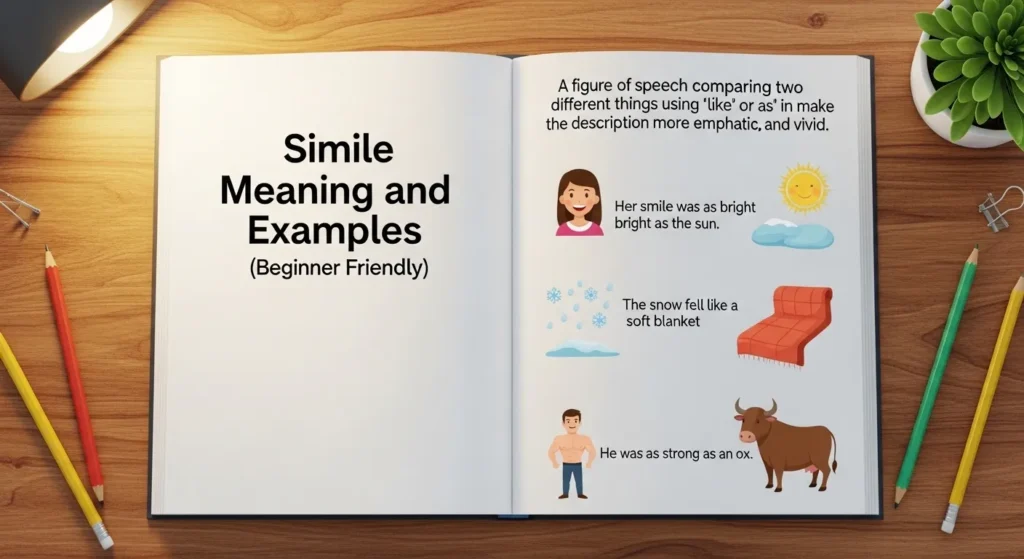
A simile is a comparison using like or as.
Comparison Using Like or As
- The sea sparkled like diamonds.
- The sand felt as soft as powder.
Why Similes Matter
- Improve descriptive language in writing
- Create visual imagery writing
- Strengthen expressive writing skills
- Add poetic language examples to stories
Similes help readers see, feel, and experience what you describe.
🌊 2 Beach Similes Examples for Creative Writing
Here are beautiful similes for the beach:
- The beach stretched like an endless carpet.
- The shore curved like a gentle smile.
- The sand glowed like golden dust.
- The ocean shimmered like glass.
- The coastline rested like a peaceful dream.
- Waves rolled like breathing giants.
- Palm trees swayed like dancers.
- The beach sparkled like treasure.
- Footprints faded like memories.
- The shore welcomed us like home.
These beach comparison examples work perfectly for essays, poems, or captions.
🌊 3 Similes About the Ocean
Ocean simile examples help describe movement and emotion.
- The ocean roared like thunder.
- Waves moved like slow breathing.
- The sea stretched like forever.
- Water shined like polished silver.
- The tide returned like a loyal friend.
- Waves crashed like drums.
- The ocean whispered like secrets.
- The sea rested like sleeping glass.
- Water flowed like silk.
- The ocean glittered like stars.
These similes for sea writing create strong imagery.
🌅 4 Similes for Sunset and Waves
Beach sunsets inspire poetic language examples.
- The sunset melted like butter over water.
- The sky burned like fire.
- The sun sank like a golden coin.
- Colors spread like paint.
- Waves reflected light like mirrors.
- The horizon glowed like gold.
- The sky blushed like a shy face.
- Sunset clouds floated like cotton.
- The sea shined like liquid gold.
- Evening light faded like a dream.
Perfect for beach sunset descriptions and storytelling.
🌤️ 5 Similes for Sea and Sky Comparisons
Nature simile examples often compare sky and ocean.
- The sky met the sea like lovers.
- Blue water looked like the sky’s twin.
- The horizon stretched like a painted line.
- Clouds drifted like boats.
- The sky opened like a window.
- Ocean and sky blended like watercolor.
- The blue sky spread like a blanket.
- The sea reflected the sky like a mirror.
- The horizon shone like silver thread.
- The sky rested like calm water.
Great for coastal scenery writing and visual imagery.
🏝️ 6 Descriptive Beach Similes Using Sensory Language
Sensory language examples engage all five senses.
Sight
- Sand sparkled like crystals.
- Water shone like glass.
Sound
- Waves sounded like applause.
- The sea roared like lions.
Touch
- Sand felt like warm flour.
- Breeze touched like a soft whisper.
Smell
- Air smelled like fresh rain.
Emotion
- The beach felt like peace.
These descriptive expressions create vivid language techniques.
🌿 7 Similes for Nature Writing and Coastal Scenery
Nature writers often use similes to paint scenes.
- Palm trees stood like guards.
- Shells lay like hidden treasures.
- Seagulls floated like paper planes.
- The shore rested like paradise.
- The sea breeze danced like music.
- Waves chased each other like children.
- Sand dunes rose like hills.
- The beach glowed like morning light.
- Water curled like ribbons.
- Nature sang like a choir.
Ideal for similes for essays and creative storytelling language.
🌊 8 Beach Imagery Examples and Creative Descriptions
Imagery in writing helps readers visualize scenes.
Example creative beach descriptions:
- The peaceful beach scenery looked like a painting.
- A calming ocean view spread like silence.
- Golden sand imagery shone like sunlight.
- The tropical beach atmosphere felt like a vacation dream.
- The seaside beauty description unfolded like poetry.
These examples strengthen descriptive writing examples.
🌅 9 Easy Similes for Students and Beginners
Simple English simile examples:
- The ocean is blue like the sky.
- Sand is soft like powder.
- Waves move like dancers.
- The beach shines like gold.
- The sun glows like fire.
- The sea breeze feels like cool air.
- Water sparkles like diamonds.
- Shells look like tiny cups.
- The beach is calm like sleep.
- The horizon looks like a line.
Perfect similes for students, kids, and beginners.
✨ 10 Figurative Language Examples for Beach Writing
Similes are part of literary devices examples.
Other figurative language includes:
- Metaphor
- Personification
- Imagery
- Symbolism
Example:
- The ocean sang like music. (simile)
- The ocean sang. (personification)
Using figurative language improves expressive writing skills and poetic storytelling.
🎨 11 How to Create Your Own Beach Similes
Follow this easy method:
Step 1: Choose an object
Example: waves
Step 2: Think of a similar thing
Example: breathing
Step 3: Compare using like or as
👉 Waves moved like breathing.
Creative Writing Techniques
- Use emotional description words.
- Think about senses.
- Keep comparisons simple.
- Practice daily.
This is how writers develop vivid language and descriptive expressions.
✏️ 12 Practice Exercise: Similes for Beach Writing
Questions
- Complete: The ocean shined like ______.
- Identify the simile: The sand felt like silk.
- Complete: Waves sounded like ______.
- Which is a simile?
- The sea is beautiful
- The sea is beautiful like glass
- Complete: The sunset looked like ______.
- Write a simile about seashells.
- Find the comparison word: The breeze felt like a whisper.
- Complete: The horizon stretched like ______.
- Write a simile describing the sky.
- Create a beach simile using as.
Answers
- Diamonds shows brightness.
- Yes, it uses like.
- Thunder or music.
- Second sentence is correct.
- Fire or gold.
- Example: Shells lay like treasure.
- Like.
- A painted line.
- Example: The sky looked like blue silk.
- Example: The sand was as warm as sunlight.
🌊 13 Why Similes Improve Creative Storytelling
Similes transform simple descriptions into powerful experiences. They help readers imagine peaceful beach scenery, feel the sea breeze, and visualize ocean waves description clearly.
Using similes in writing:
- Builds imagery in writing
- Strengthens creative storytelling language
- Improves essays, poems, captions, and blogs
- Makes emotional writing more engaging
The beach is one of the best subjects for similes because it connects sight, sound, emotion, and nature.
Start noticing comparisons around you. The next time you see the ocean, ask yourself:
👉 What does this remind me of?
That single question can turn anyone into a creative writer.
Conclusion
The beach, with its golden sands and rhythmic waves, inspires endless creativity. Using similes helps capture its beauty, comparing it to shimmering silk, a painter’s canvas, or a playground of nature.
These comparisons make the imagery vivid and relatable, letting readers feel the sun, hear the waves, and smell the salt. Similes turn simple observations into memorable experiences, showing that the beach is more than a place it’s a living, breathing story.
.