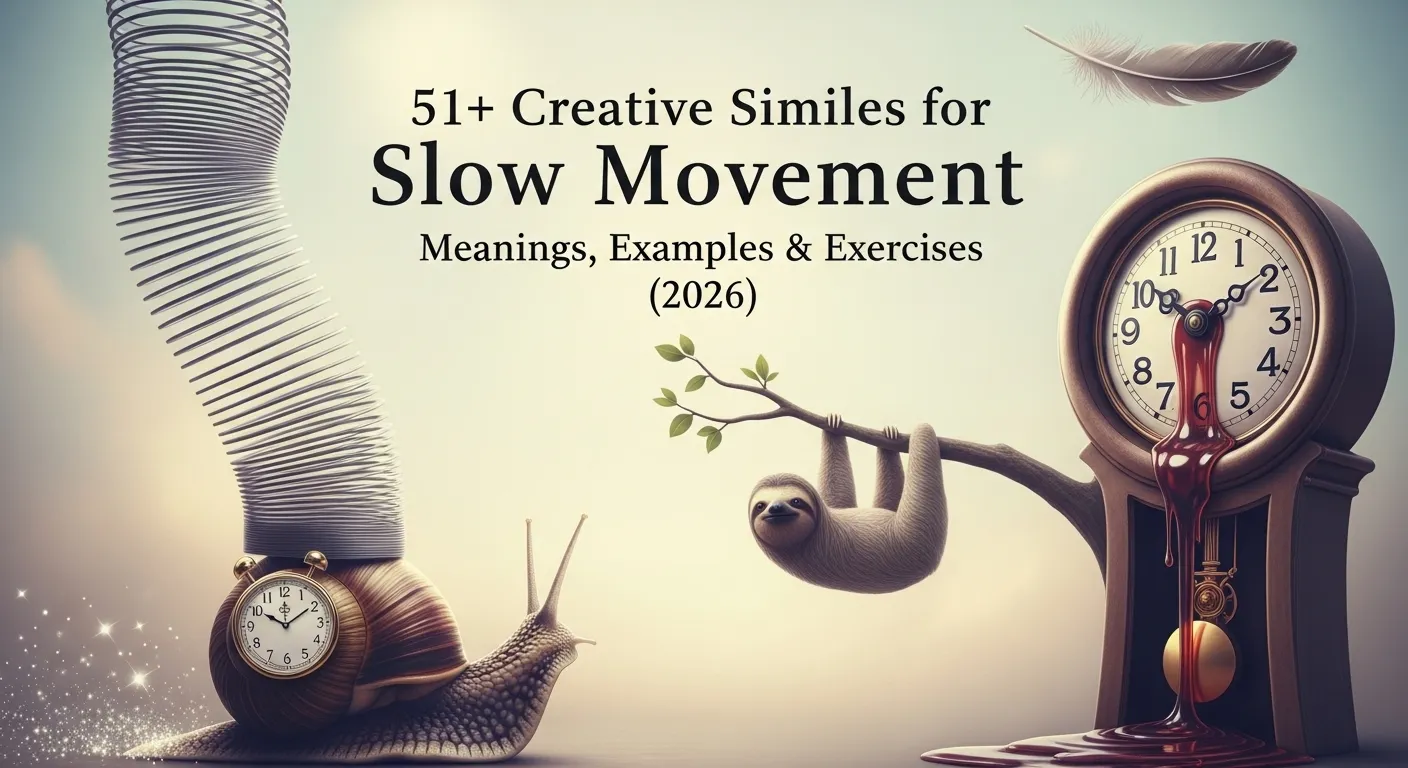
Hey! So, I was trying to describe something really slow the other day, and honestly, it reminded me of how sometimes life itself feels like it’s dragging.
I needed a good simile for slow moving, and trust me, I went through a few awkward ideas before I nailed it. I mean, I was stuck thinking, How do I make this sound relatable?
That’s when it hit me I could compare it to a turtle, or even syrup dripping off a spoon. It instantly made the description click.
I actually used this in a funny little story while chatting with a friend, and they totally got it. It was like, I had this tricky situation, and instead of just saying slow, I painted a picture, which made everything easier to explain.
Honestly, I think everyone needs a few similes for slow moving in their toolkit because sometimes words like slow just don’t capture the feeling.
I handled it by keeping it simple, relatable, and a little funny because if you can make someone smile while explaining, you’re winning.
Next time you’re stuck trying to describe something dragging along, just remember my little hack it works every time!
1. Similes for Slow
Similes for slow describe any kind of gradual or gentle movement. They make writing more engaging by painting vivid pictures.
Examples:
- As slow as a snail extremely slow.
- Like a lazy river slow and peaceful.
These help readers visualize motion rather than just reading a plain description.
2. Slow Similes Examples
Here are some common slow similes you can use:
- Slow as molasses
- Like a sloth walking
- Slow as melting ice
- Like fog rolling in
Meaning: Each simile highlights a different type of slowness some sticky, some quiet, some steady.
Example Sentences:
- The train moved as slow as molasses through the snow.
- Time passed like fog rolling in, unnoticed but steady.
3. Slow Comparison Examples
Comparison examples make slow motion more relatable. Writers often use animals, food, or natural elements.
Examples:
- Like a turtle crossing the road
- As slow as growing grass
- Like thick honey dripping
Explanation: Each one links slowness to something familiar, enhancing understanding and imagery.
4. Similes Describing Slow Movement
Similes describing slow movement help create a peaceful or gentle tone in writing.
Examples:
- Slow as a fading sunset
- Like a sleepy cat walking
- As slow as a tired runner
These are excellent for descriptive writing techniques, allowing readers to experience the calm pace.
5. Examples of Similes for Slow
Here’s a larger list you can use in writing:
- Slow as a snail
- Like a lazy river
- Slow as molasses
- Like a sloth
- Slow as melting ice
- Like fog rolling in
- Slow as growing grass
- Like thick honey dripping
- Slow as traffic in a storm
- Like an old clock ticking
These examples show figurative language in action and can inspire your own similes.
6. Slow Motion Similes
Slow motion similes highlight deliberate, graceful, or quiet movements:
- Like a leaf drifting down
- Slow as a floating cloud
- Like a snail on soft soil
Tip: These work well in poetic descriptions or creative writing expressions, creating imagery that feels natural and serene.
7. Figurative Language Similes
Using figurative language similes strengthens writing by connecting abstract ideas to concrete images.
- As slow as patience itself emphasizes calmness.
- Like gentle waves rolling in evokes serenity.
These can be applied in essays, stories, or even English simile examples for students.
8. Similes in English Writing
Similes are vital for students and writers alike. They make sentences vivid and memorable.
Examples in English writing:
- Slow as a story unfolding emphasizes pacing.
- Like a sunrise creeping over the horizon shows gradual beauty.
Tip: Try adding a simile in your next paragraph to make it pop.
9. Descriptive Similes List
Here’s a quick descriptive similes list for slow movement:
- Like a sleepy kitten stretching
- As slow as a candle melting
- Like a river winding through a valley
- Slow as a drifting feather
These are perfect for sensory language examples and writing with imagery.
10. Similes for Movement Description
When describing movement, similes bring action to life.
- Slow as a dancer stretching in rehearsal
- Like a snail exploring the garden
- Slow as shadows moving at dusk
These work well for creative writing expressions or poetic nature imagery.
11. Creative Similes for Slow
Adding creativity to similes makes them unique:
- Like syrup sliding down a spoon
- Slow as a gentle snowfall
- Like clouds lazily drifting across the sky
These examples enhance peaceful writing ideas and calm movement descriptions.
12. Literary Similes Examples
Writers and poets often use literary similes to add depth and emotion:
- Slow as a memory fading
- Like music lingering in a quiet room
- Slow as a story told in whispers
These fit literary comparisons, poetic similes list, and relaxing descriptive phrases.
13. Similes for Calm Movement
Similes that show calm, gentle motion create serenity in writing:
- Like a swan gliding on a lake
- Slow as a candle flickering in the dark
- Like a leaf floating on a pond
These are excellent for gentle motion words, soft motion expressions, and peaceful motion examples.
Practice Exercise: Identify or Complete the Simile
- The train moved as slow as a ______.
- Time drifted like ______ falling from the sky.
- He walked as slow as a ______ after lunch.
- The river flowed like a ______ river.
- Growth was as slow as ______.
- Traffic crawled like a ______ in the city.
- Fog settled like ______ rolling in.
- The kitten moved as slow as a ______.
- Sunset faded like a ______ disappearing.
- The cart climbed the hill like a ______.
Answers:
- snail
- snowflake
- sloth
- lazy
- grass
- turtle
- fog
- sloth
- sun
- heavy cart
Explanation: These exercises reinforce understanding of slow similes and how to use them in sentences.
Conclusion
In conclusion, using similes to describe slow movement adds vividness and relatability to writing. Phrases like as slow as a snail or like molasses in winter help readers instantly grasp the pace and create a stronger mental image.
Such comparisons make descriptions more engaging and memorable, allowing the audience to connect emotionally with the scene. Incorporating these similes enriches storytelling and brings even the slowest actions to life.