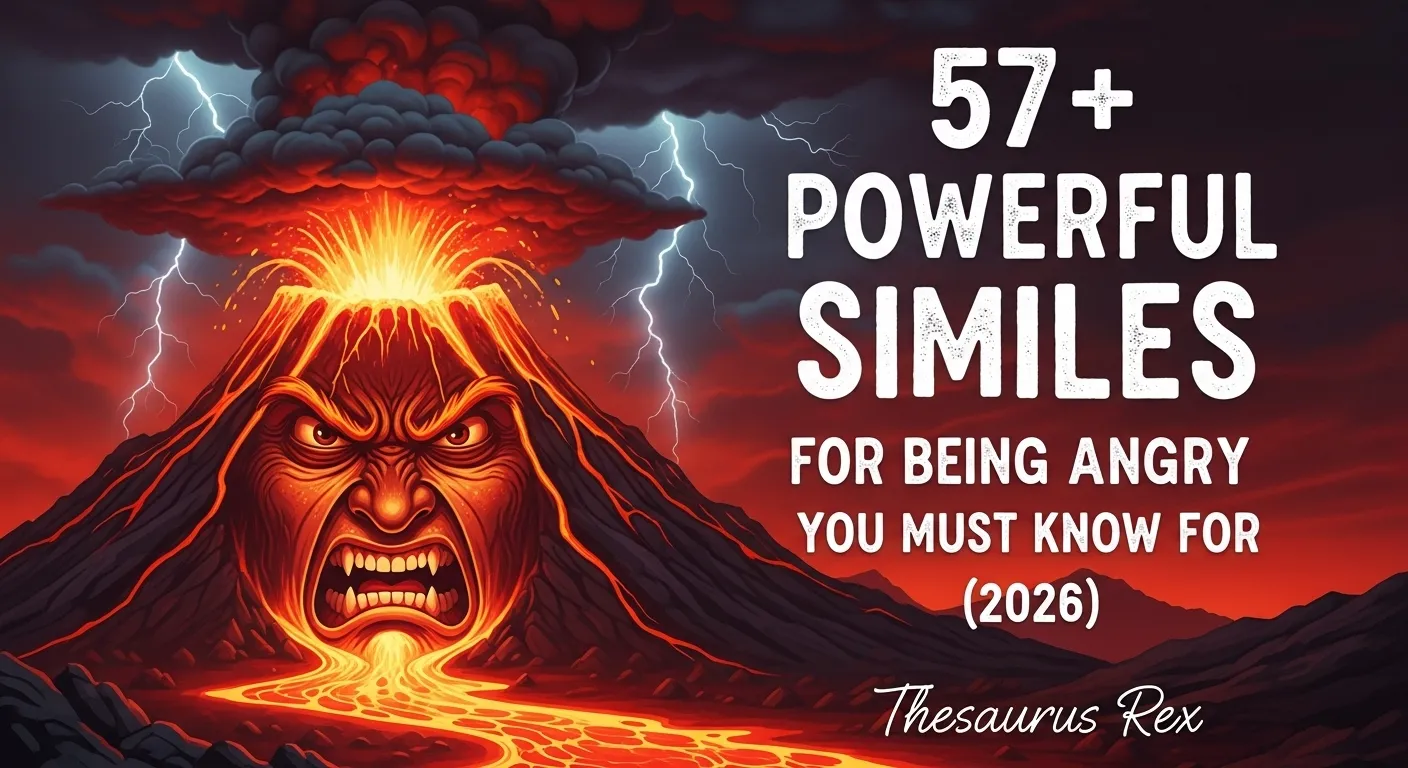
Have you ever felt your temper flare up like a volcano about to erupt? I know I have. Just the other day, I was scrolling through my phone when I stumbled upon something that instantly set me off.
My blood boiled, my fists clenched, and I felt as furious as a storm raging at sea. I had to step back for a moment because I knew if I reacted immediately, things would spiral out of control.
I realized that anger is tricky it sneaks up on you, but how you handle it makes all the difference. That pause gave me the space to think clearly, and suddenly, my anger didn’t control me anymore; I controlled it.
Using a simile for being angry not only helped me describe the intensity of my feelings but also reminded me that words can be powerful tools to express what’s inside without hurting anyone. Next time I feel that fire, I’ll remember that even the hottest storm eventually passes.
.
What Is a Simile in English?
A simile is a type of figurative language that compares two different things using the words “like” or “as.”
These comparisons help writers describe feelings, actions, and ideas in a creative way.
For example:
- As angry as a hornet
- Like a volcano ready to erupt
- As red as a tomato
These are simple similes in English with examples that show strong emotion.
Similes are common in creative writing, storytelling, poetry, and literature. They help readers visualize situations and understand emotions more deeply.
Without similes, writing can feel flat. With them, writing becomes more colorful and engaging.
Why Writers Use Similes to Describe Anger
Anger is a strong emotion, and writers often want readers to feel the intensity.
That is why emotional figurative language is useful. Similes help readers imagine the emotion clearly.
For example:
- Saying “He was angry” is simple.
- Saying “He was like a volcano ready to erupt” creates a vivid image.
Using comparison phrases for anger adds power to your writing.
Benefits of similes include:
- Making writing more descriptive
- Helping readers imagine emotions
- Improving storytelling
- Creating stronger emotional impact
Because of these benefits, creative writing similes are commonly used in stories and literature.
15 Powerful Similes for Anger
Below is a helpful simile examples list showing common ways to describe anger.
These examples show how figurative comparison for anger works in everyday writing.
Simile 1: As Angry as a Hornet
Meaning: Extremely angry and ready to react.
Hornets are known for becoming aggressive when disturbed.
Examples
- He was as angry as a hornet after hearing the insult.
- The teacher looked as angry as a hornet when students ignored the rules.
Simile 2: Like a Volcano Ready to Erupt
Meaning: Anger building up and about to explode.
Examples
- She stood there like a volcano ready to erupt.
- His face looked tense like a volcano ready to erupt.
Simile 3: As Mad as a Wet Hen
Meaning: Very irritated or annoyed.
Examples
- My mother was as mad as a wet hen when she saw the mess.
- The manager looked as mad as a wet hen after the mistake.
Simile 4: Like a Bull Seeing Red
Meaning: Suddenly becoming very angry.
Examples
- He charged forward like a bull seeing red.
- The player reacted like a bull seeing red during the argument.
Simile 5: As Red as a Tomato
Meaning: Face turning red because of anger.
Examples
- His face turned as red as a tomato during the debate.
- She looked as red as a tomato after the accusation.
Simile 6: Like a Boiling Kettle
Meaning: Anger slowly building up.
Examples
- He stood quietly like a boiling kettle.
- Her frustration grew like a boiling kettle.
Simile 7: As Furious as a Storm
Meaning: Wild and uncontrollable anger.
Examples
- He was as furious as a storm during the argument.
- Her shouting sounded as furious as a storm.
Simile 8: Like Thunder in the Sky
Meaning: Loud and powerful anger.
Examples
- His voice crashed like thunder in the sky.
- The boss shouted like thunder in the sky.
Simile 9: As Fiery as a Dragon
Meaning: Extremely intense anger.
Examples
- She looked as fiery as a dragon when she heard the news.
- His temper became as fiery as a dragon.
Simile 10: Like a Roaring Lion
Meaning: Loud, powerful anger.
Examples
- The coach shouted like a roaring lion.
- His voice rose like a roaring lion.
Simile 11: Like a Ticking Time Bomb
Meaning: Someone about to explode with anger.
Examples
- He sat quietly like a ticking time bomb.
- Everyone avoided him because he looked like a ticking time bomb.
Simile 12: As Wild as a Raging Fire
Meaning: Anger spreading quickly.
Examples
- His anger grew as wild as a raging fire.
- The argument spread as wild as a raging fire.
Simile 13: Like a Shaken Soda Bottle
Meaning: Anger bursting suddenly.
Examples
- He exploded like a shaken soda bottle.
- Her frustration popped like a shaken soda bottle.
Simile 14: As Sharp as Lightning
Meaning: Sudden anger appearing instantly.
Examples
- His anger flashed as sharp as lightning.
- Her response came as sharp as lightning.
Simile 15: As Hot as Fire
Meaning: Very intense rage.
Examples
- His temper was as hot as fire.
- She became as hot as fire after hearing the truth.
Anger Metaphors and Similes
Many writers combine anger metaphors and similes to describe emotion.
Examples include:
Similes:
- As angry as a hornet
- Like thunder in the sky
Metaphors:
- His anger was a storm
- Rage burned inside him
Both are forms of figurative language examples used to create powerful writing.
Simile Examples in Literature
Similes appear often in literature and poetry.
Writers use emotional figurative language to show feelings clearly.
For example, many novels describe characters as:
- “as furious as a storm”
- “like a roaring lion”
These simile examples in literature help readers imagine emotions vividly.
How to Write a Simile for Anger
Creating your own creative similes for anger is simple.
Follow these steps:
1. Think of the Emotion
Start with the feeling: anger, rage, or fury.
2. Find Something Similar
Think of something powerful or explosive.
Examples:
- volcano
- storm
- fire
3. Use “like” or “as”
Combine them into a comparison.
Example:
- Angry like a volcano ready to erupt
This is how writers create simile examples for writing.
Practice Exercise: Identify the Simile
Try these simile sentences for students.
- He was as angry as a ______.
- Her anger rose like a ______ kettle.
- His face turned as red as a ______.
- The coach roared like a ______.
- He looked like a ticking ______.
- Her voice crashed like ______ in the sky.
- His anger spread as wild as a ______ fire.
- She stood like a volcano ready to ______.
- His temper burst like a shaken ______ bottle.
- His reaction came as sharp as ______.
Exercise Answers with Explanation
- Hornet – shows extreme anger
- Boiling – anger building slowly
- Tomato – red face from anger
- Lion – loud anger
- Time bomb – anger about to explode
- Thunder – loud emotional reaction
- Raging – anger spreading quickly
- Erupt – explosion of emotion
- Soda – sudden burst
- Lightning – sudden anger
Conclusion
Being angry is like a storm brewing in the sky unpredictable, intense, and ready to burst at any moment. It clouds judgment, stirs tension, and can affect everyone nearby.
Just as lightning can illuminate or destroy, anger has the power to reveal truth or cause harm. Yet, like a storm that eventually passes, anger too can be calmed with patience, reflection, and understanding.
Recognizing its presence allows us to manage it rather than be controlled by it. By treating anger as a signal rather than a weapon, we can transform emotional turbulence into growth and insight.